How Clean Code Practices Improve Product Scalability

Clean code fixes that at the root.
What Is Clean Code, Really?
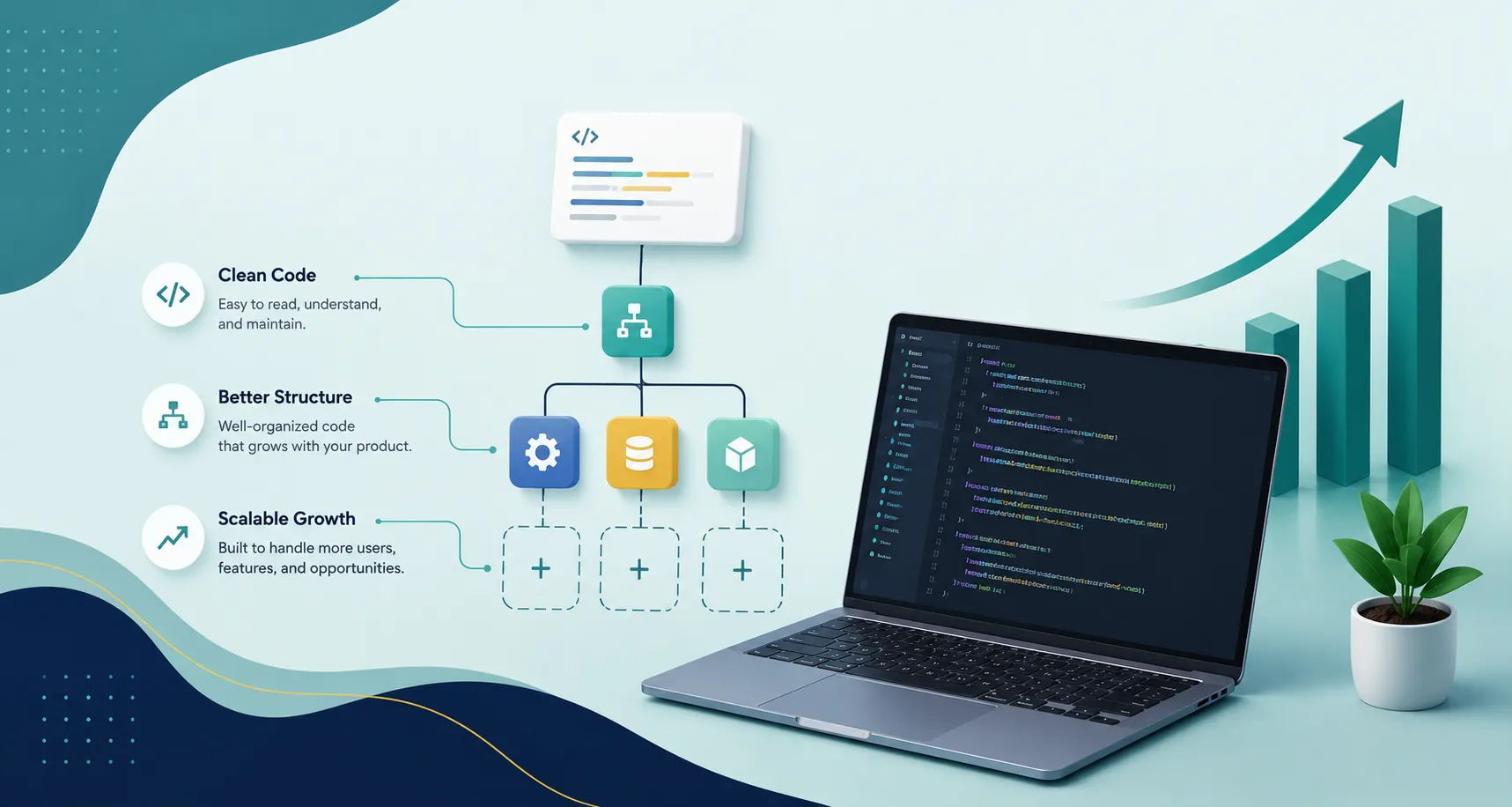
Clean code isn't just neat-looking code. It's code that any developer on your team can read, understand, and build on. Without needing a two-hour explanation session, it's consistent, predictable, and built with the next person in mind.
Think of it like a well-organised warehouse versus a cluttered storage room. You can find what you need, add new inventory, and fix problems quickly — because everything has a place.
Why It Matters for Scalability
When a product is built with clean practices from day one, adding new features doesn't mean rewriting old ones. Your team can work faster, onboard new developers more quickly, and fix issues without causing three new ones in the process.
Here's what that looks like in practice
Faster feature development: Developers spend less time figuring out what existing code does and spend more time building.
Fewer bugs in production: Organised, well-structured code is easier to test and harder to break unintentionally.
Lower long-term costs: Messy code costs money. Fixing, patching, and firefighting eat into your development budget in every sprint.
Easier team scaling: When your team grows, new developers can contribute meaningfully from week one instead of spending months decoding legacy logic.
The Real Business Impact
Businesses that invest in clean code practices early don't just have better software; they have a competitive edge. They ship faster. They adapt to market changes more easily. And when they're ready to scale infrastructure or add a new product line, the foundation holds.
At Micacity, clean, maintainable code isn't a bonus – it's built into every product we engineer. Because the products we build today need to support the businesses our clients want to become tomorrow.